Preparing for gastric sleeve, gastric bypass, or another bariatric procedure means more than just planning for the operation itself — the first weeks at home involve a very different diet, new daily routines, and a recovery timeline that's easy to underestimate. Here's a realistic look at what bariatric surgery recovery typically involves, how the diet progresses in stages, and the warning signs that deserve a call to your surgical team.
Key Takeaways
- Hospital stays are typically short — often one to two days for a gastric sleeve, and around two days for a gastric bypass.12
- Diet progresses in stages: liquids for the first one to two weeks, then soft or pureed foods for roughly two to three months, before a gradual return to solid food.12
- Most patients should plan on avoiding strenuous activity for two to four weeks and allow about a month before feeling back to full capacity at work.12
- Daily vitamin and mineral supplementation typically begins soon after surgery and continues long-term, since the procedure reduces how much nutrition the body absorbs from food.2
- Contact your surgical team promptly for fever, spreading redness or discharge at the incision, severe abdominal pain, or an inability to keep fluids down.1
What Bariatric Surgery Recovery Typically Looks Like
"Bariatric surgery" covers a handful of related procedures — gastric sleeve (sleeve gastrectomy), gastric bypass, and vertical sleeve gastrectomy (VSG) among them — and while the details differ, the overall recovery pattern is similar. The first weeks focus on protecting the surgical site, carefully reintroducing food in stages, and adjusting to a much smaller stomach capacity. From there, recovery shifts toward building sustainable eating and activity habits that support long-term weight loss and health.
Hospital stays tend to be brief. Many gastric sleeve patients stay one to two days after surgery, and gastric bypass patients often stay around two days, mainly so the care team can manage pain and early side effects like nausea before discharge.12
Fatigue is common in the early weeks as your body adjusts to a significantly lower calorie intake. That's expected, and it typically improves as your diet advances and your body adapts.2
The First Days After Surgery
Right after surgery, the focus is on pain control, monitoring for early complications, and starting you on sips of clear liquids once your care team confirms it's safe. Nausea and fatigue are common in the first days and generally ease as you recover.1
Before discharge, you'll typically be shown how to manage your liquid diet at home, given a plan for pain medication, and taught the early warning signs to watch for. Most patients go home within one to two days of a gastric sleeve, or around two days after a gastric bypass.12
Diet Progression: Liquids, Purees, And Solid Food
Diet progression after bariatric surgery generally follows a staged pattern, though your surgeon's specific plan always takes priority over any general guide:
- Weeks 1–2: A liquid diet is standard immediately after surgery, since the stomach needs time before it can handle anything more.12
- Months 1–3: Soft or pureed foods that are easy to digest typically follow, often continuing for two to three months.1
- After 3 months: A gradual transition toward more regular solid foods, introduced carefully and guided by your care team.12
Even once you're eating more normally again, portion sizes stay much smaller than before surgery, and choosing nutrient-dense foods matters more than ever, since your stomach can only hold a fraction of what it used to.2
Activity, Vitamins, And Daily Routines At Home
Most patients are advised to avoid strenuous activity for roughly two to four weeks after surgery, while gentle movement like short walks is usually encouraged from early on to support circulation and recovery. Always check with your care team before starting a new exercise routine.1
Daily vitamin and mineral supplementation is one of the most important long-term habits after bariatric surgery. Because the procedure changes how much nutrition your body absorbs from food, most patients begin taking vitamins shortly after surgery and continue permanently.2 Staying on top of hydration is equally important, since smaller stomach capacity makes it easier to fall behind on fluids than before surgery.
Portion-control tools — measured serving spoons, small containers, and a food scale — can make it considerably easier to stick with the smaller, carefully measured meals this stage of recovery requires.
Helpful Bariatric Recovery Kit For Home Support
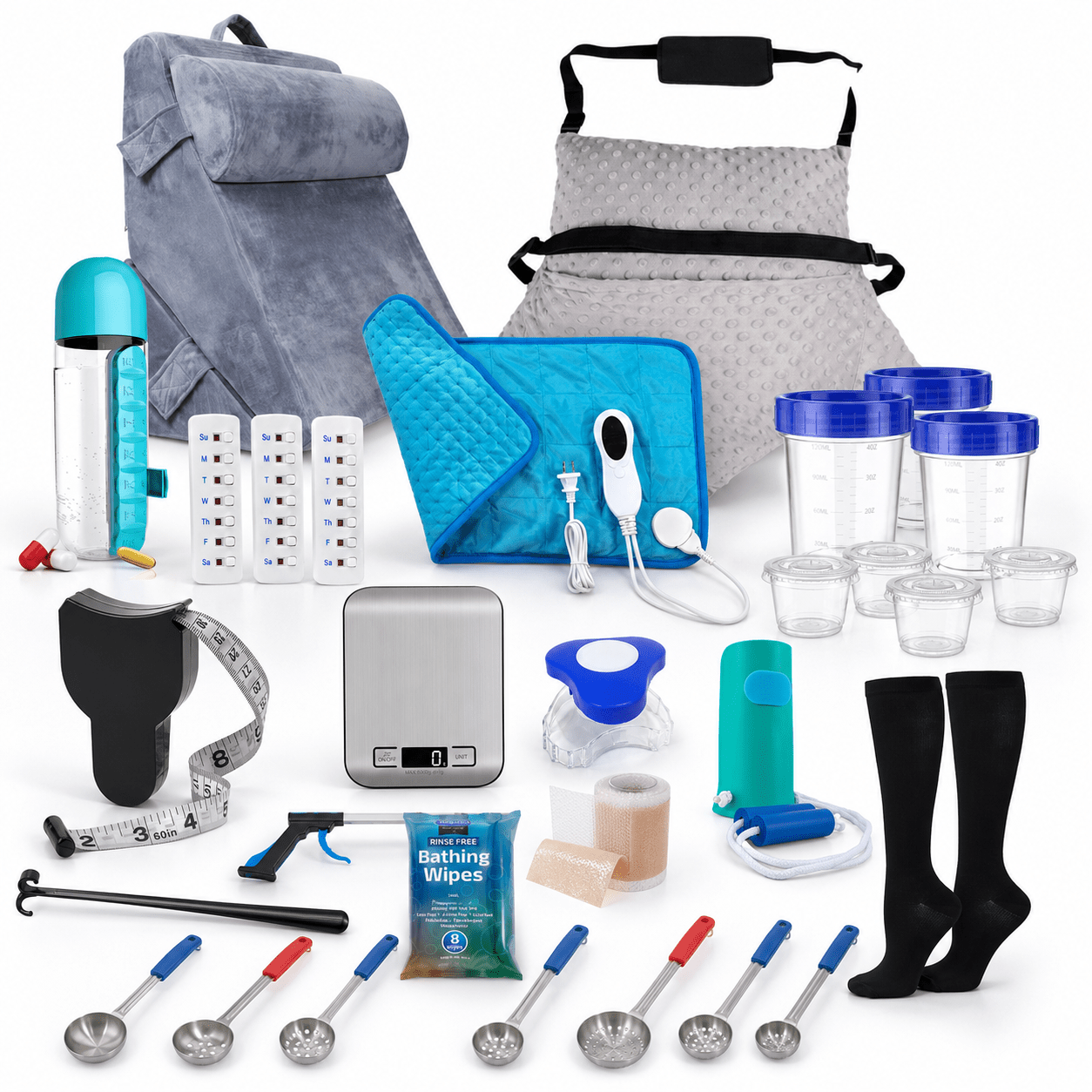
Between a new diet, new portion sizes, and a body that's still healing, bariatric recovery involves a lot of moving pieces. The Bariatric Surgery Recovery Kit (34 pc) brings portion-control tools together with practical at-home comfort essentials in one kit.
It's built around portion control and daily comfort, including 1 oz portion cups, 4 oz containers, a digital food scale, eight measured serving spoons, an adjustable wedge pillow, a bariatric recovery pillow, a weighted heating pad, medication trackers, and a body measuring tape.3
- Helps take the guesswork out of measuring smaller, staged portions.
- Supports comfortable rest and recovery during the early weeks at home.
- Many of the portioning tools stay useful well beyond the initial recovery period.
Recovery Timeline From Weeks To Months
Every bariatric program sets its own specific diet and activity milestones. Treat this timeline as a general guide, and rely on your surgical team's plan for the specifics that apply to you.
Warning Signs And When To Call Your Surgeon
Contact your surgical team promptly if you develop a fever over 101°F, thick or discolored discharge from an incision, or redness that spreads beyond the wound edge.1
Severe abdominal pain or bloating, nausea or vomiting whenever you eat or drink, or an inability to pass gas or have a bowel movement are also reasons to call right away rather than waiting to see if things improve on their own.1
As with any major surgery, sudden chest pain, shortness of breath, or significant swelling in one leg can signal a serious complication and need immediate medical attention — call 911 rather than waiting.
Conclusion
Bariatric surgery recovery is as much about building new habits as it is about physical healing — advancing through diet stages carefully, staying on top of hydration and vitamins, and giving your body the time it needs before jumping back into a normal routine. Stick with your care team's specific plan, watch for the warning signs that call for a check-in, and the day-to-day adjustments get noticeably easier with each passing week.
Bariatric Surgery Recovery FAQs
How long is the hospital stay after bariatric surgery?
It's typically short. Many gastric sleeve patients stay one to two days, and gastric bypass patients often stay around two days, mainly so the care team can manage pain and early side effects before discharge.12
What does the diet look like after bariatric surgery?
Diet typically progresses in stages: a liquid diet for the first one to two weeks, then soft or pureed foods for roughly two to three months, followed by a gradual, carefully guided return to more regular solid foods in smaller portions.12
When can I return to work and normal activity after bariatric surgery?
Many patients avoid strenuous activity for about two to four weeks and start feeling back to full capacity around the one-month mark, though your surgeon's specific guidance always takes priority.12
Do I need to take vitamins after bariatric surgery?
Yes, typically for the rest of your life. Because bariatric surgery reduces how much nutrition your body absorbs from food, most patients begin daily vitamin and mineral supplementation shortly after surgery and continue it permanently.2
What symptoms after bariatric surgery need urgent medical attention?
Fever over 101°F, spreading redness or discharge at the incision, severe abdominal pain or bloating, vomiting whenever you eat or drink, and an inability to pass gas or have a bowel movement all warrant a prompt call to your surgical team.1