
Knee Surgery Recovery
Sort by
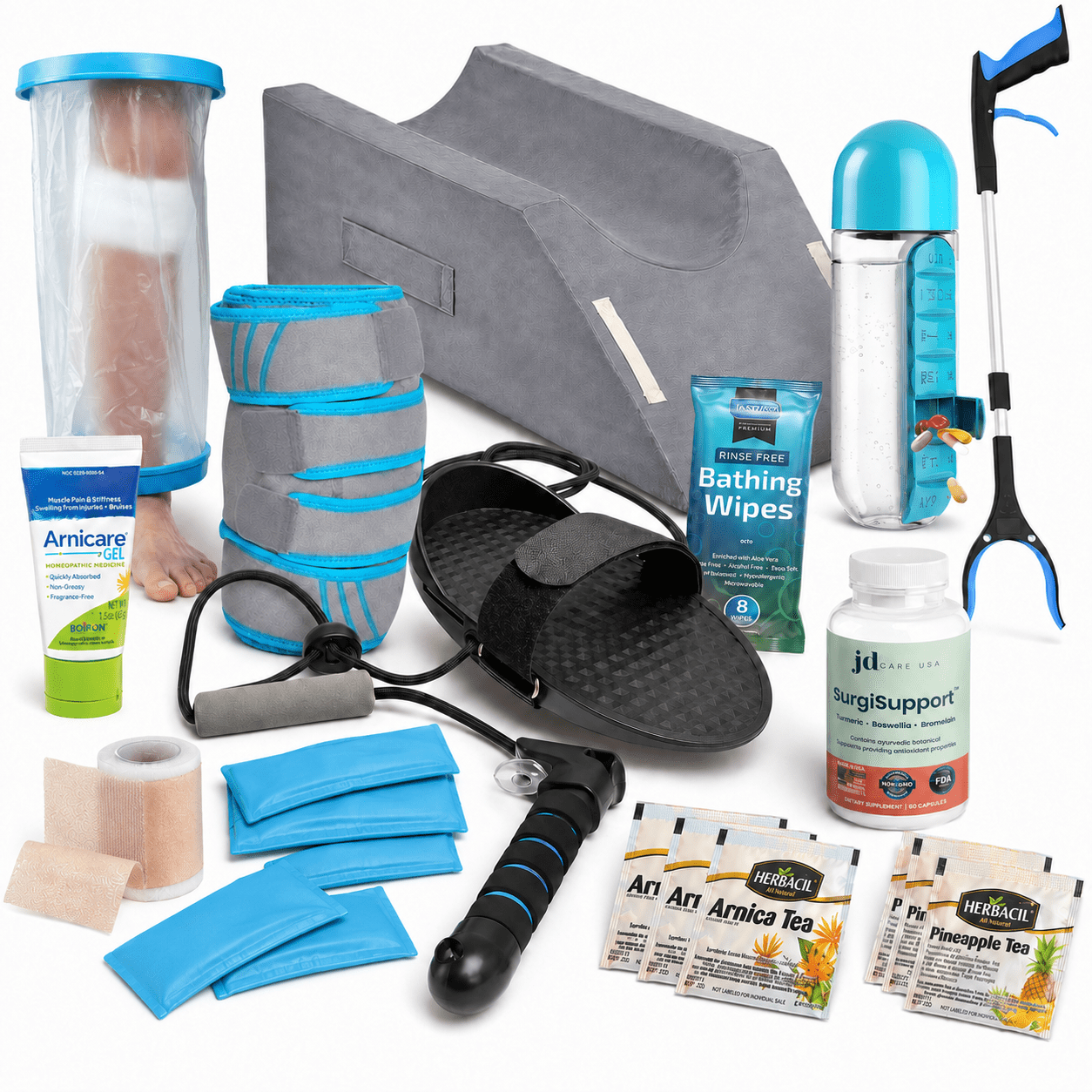
Knee Surgery Recovery: Timeline, Tips, And What To Expect
Knee surgery recovery isn't one-size-fits-all. Whether you're having a total knee replacement, an ACL reconstruction, or a meniscus procedure, the principles are similar: protect the repair, control pain and swelling, regain motion, then rebuild strength and confidence. This guide gives you a clear timeline, practical steps for each stage, and red flags you shouldn't ignore, so you go in prepared and come out moving better.
Setting Yourself Up For Success Before Surgery
Home Preparation And Safety Setup
A little prep now spares you a lot of hassle later. Before your procedure, set up a "recovery zone" on the main floor if possible.
- Clear walkways, coil cords, and remove throw rugs to reduce tripping.
- Arrange a firm, higher chair with armrests: low couches are hard to exit.
- Place essentials waist-to-shoulder height: meds, water, phone charger, ice packs, remote, and a nightlight for bathroom trips.
- Install grab bars or a stable shower chair: use a non-slip bath mat and a handheld shower head if you have one.
- If you have pets or kids, plan gates or help for the first few days when you're less steady.
Prehab: Mobility And Strength You Can Build Now
Stronger in equals stronger out. With your surgeon's or PT's clearance:
- Practice gentle quad sets, heel slides, straight-leg raises, and ankle pumps to prime your muscles and circulation.
- Work on terminal knee extension (getting the knee fully straight) and patellar mobility if your provider recommends it.
- Build hip and core strength, bridges, clamshells, and glute sets, to support your gait later.
- Learn crutch/walker technique beforehand so it's second nature post-op.
Planning Pain Control, Transportation, And Support
- Discuss a multimodal pain plan: typically acetaminophen, possibly an NSAID if safe for you, short-term opioids, and sometimes a regional nerve block. Ask about anti-nausea meds and stool softeners.
- Line up a ride home and help for at least the first 24–72 hours. You shouldn't drive while taking opioids or while your reaction time is impaired.
- Clarify your DVT prophylaxis (blood thinner, compression stockings, or both) and your exact post-op PT timeline. Bring written instructions home.
The First 72 Hours: Pain, Swelling, And Safe Movement
Pain Control Options And What's Normal
Expect soreness, swelling, and stiffness, most intense in the first 48–72 hours. You should be able to manage pain enough to sleep in stretches and participate in light activity.
- Acetaminophen is a backbone medication: NSAIDs may be used if your surgeon approves and you don't have bleeding, kidney, or GI risks.
- Opioids are for breakthrough pain only and typically for a few days. Take the lowest dose for the shortest time.
- Ice and elevation are powerful analgesics. So are gentle motion and deep, slow breathing.
- Nerve blocks can make the first 18–36 hours easier, but sensation and strength will return, use your assistive device to protect against falls.
Call if pain worsens rather than improves, or if meds don't touch it.
Ice, Elevation, Compression, And Wound Care Basics
- Ice 15–20 minutes at a time with a barrier on the skin, several times per day. Combine with elevation: heel higher than heart to reduce swelling.
- Use compression stockings or wraps as prescribed to support venous return.
- Keep dressings clean and dry. Unless you have a waterproof dressing, avoid showering until your surgeon clears it: never soak the incision (no baths, hot tubs, or pools) until fully sealed.
- A small amount of spotting or bruising is common. Increasing redness, drainage, warmth, or odor isn't, call your team.
First Steps: Weight Bearing, Assistive Devices, And Fall Prevention
- Follow your exact weight-bearing status (weight as tolerated vs partial or non-weight-bearing) based on your procedure.
- Use your walker or crutches until your PT confirms a safe gait pattern. Keep the device close: don't "furniture walk."
- Stairs: "Up with the good, down with the bad." Handrail and device on the opposite side when possible. Have a spotter early on.
- Wear supportive, closed-back shoes. Keep pathways lit at night. Take your time, speed is the enemy of stability.
Weeks 1–2: Regaining Motion And Daily Independence
Range-Of-Motion Targets And Gentle Exercise Progressions
Your two big goals now: full knee extension and steadily increasing flexion, guided by your surgeon's protocol.
- Typical early targets after knee replacement: extension to 0° and flexion to about 90° by the end of week 2. Other surgeries vary, follow your plan.
- Continue quad sets, heel slides, straight-leg raises (if no lag), seated knee flexion, and ankle pumps. Add gentle patellar mobilizations if instructed.
- Short, frequent sessions beat marathon workouts. Mild discomfort is expected: sharp pain or swelling spikes mean back off and ice.
Incision Care, Showering, And Sleep Positions
- Keep the incision dry unless told otherwise: once cleared, let water run over it and pat dry, no scrubbing. Don't apply ointments unless prescribed.
- Watch for edges separating, thick drainage, or spreading redness.
- Sleep with the knee straight or supported to keep it neutral: avoid keeping a pillow directly under the knee for long periods, which can promote a flexed posture.
- Side sleeping: place a pillow between knees. Back sleeping: a small pillow under the calf/ankle can help achieve full extension.
Driving, Stairs, And Around-The-House Activities
- You can drive when you're off opioids, have adequate reaction time, and can perform an emergency stop. For right-leg surgeries, that's often 2–6 weeks after a knee replacement: simpler arthroscopies can be sooner. Always confirm with your surgeon and insurer.
- Light household tasks are fine if they don't increase swelling: meal prep at counter height, short walks every hour, and gentle stationary cycling (if cleared) with high seat/low resistance.
- Keep working your stair technique and balance drills with supervision as needed.
Weeks 3–12: Strength, Balance, And Return To Activities
Progressive Physical Therapy And Gait Training
This is the engine room of knee surgery recovery. You're transitioning from basic mobility to strength, endurance, and normalized gait.
- Progress hip and knee strengthening: sit-to-stands, step-ups, mini-squats, hamstring and calf work, and closed-chain exercises. Add resistance bands or light weights as tolerated.
- Stationary bike and, later, elliptical can build range and conditioning without impact. Focus on symmetrical stride, heel-to-toe roll, and knee alignment over the foot.
- Balance: single-leg stance (when safe), tandem stance, and dynamic weight shifts reduce fall risk and improve confidence.
Weaning Off Braces, Walkers, And Canes
- Your PT will test balance, strength, and gait quality before you transition devices. Generally, move from walker to cane to no device once you can walk without limping or compensations.
- Bracing depends on the procedure (e.g., ACL or meniscus repairs may require specific brace settings). Don't change settings or discard the brace without explicit clearance.
Work, Recreation, And Sport: When It's Safe To Resume
- Desk work: often 2–4 weeks post knee replacement: earlier after minor arthroscopy. Standing or manual jobs can take 6–12+ weeks depending on demands.
- Low-impact recreation (walking loops, gentle hiking, cycling, swimming once incision is fully healed) typically resumes in the 6–12 week window.
- Higher-impact or pivoting sports require surgeon clearance and objective strength/balance benchmarks, often several months or longer, especially after ligament reconstructions. Prioritize joint protection over the calendar.
Managing Pain, Medications, Nutrition, And DVT Prevention
Using Medicines Wisely And Tapering Safely
- Acetaminophen: schedule within safe daily limits (mind combo products). NSAIDs only if your clinician okays them: consider a stomach protector if you're at GI risk.
- Opioids: take only as needed for severe pain, typically a few days. Taper by spacing doses further apart, then reducing dose. Use stool softeners, hydrate, and move to prevent constipation.
- Some patients receive nerve pain agents or muscle relaxants: use exactly as prescribed and report side effects like sedation or confusion.
- Keep a simple med log to avoid double dosing, especially overnight.
Nutrition, Hydration, And Supplements That Support Healing
- Aim for protein at each meal (lean meats, dairy, beans, tofu), colorful produce for antioxidants, and whole grains for steady energy.
- Hydrate consistently: dehydration increases DVT risk and worsens fatigue.
- Vitamin C, D, and calcium may help if deficient: fish oil and turmeric can affect bleeding, clear any supplement with your surgeon before use.
- Limit alcohol while on pain meds and during early healing.
Blood Clot Prevention And Warning Signs
- Move early and often: ankle pumps every hour, frequent short walks, and avoid long sedentary periods.
- Use prescribed anticoagulants exactly as directed and wear compression stockings if recommended.
- Call immediately for new calf pain or tenderness, one-sided swelling, warmth, or redness. Go to urgent care/ER for chest pain, sudden shortness of breath, coughing blood, or a rapid unexplained heart rate, possible pulmonary embolism.
Complications And When To Call Your Surgeon
Infection Signs, Excessive Swelling, Or Worsening Pain
- Fever over 101.5°F (38.6°C), chills, increasing redness spreading from the incision, thick or foul drainage, or the wound edges pulling apart require prompt evaluation.
- Swelling that rapidly increases or pain that escalates after initially improving isn't typical, report it.
Mechanical Red Flags: Locking, Instability, Or Calf Pain
- True locking (can't fully bend or straighten), a sudden give-way sensation, audible pop with pain, or new deformity can signal a mechanical issue.
- New calf pain or a firm, tender cord in the calf can indicate a DVT, seek care now.
Falls Or Fevers: What It's Do Right Away
- After any fall, even if you "feel fine," notify your team, repairs, grafts, or implants may be at risk.
- For persistent fever, confusion, chest symptoms, or uncontrolled pain, err on the side of urgent evaluation. It's always better to call early.
Conclusion
Knee surgery recovery hinges on preparation, consistent habits, and early attention to warning signs. Control swelling, protect the repair, regain motion methodically, and then rebuild strength and balance with your PT. Progress isn't perfectly linear, expect plateaus and small leaps. Stay engaged with your care team, and you'll stack up wins that matter: steadier steps, better sleep, and a knee you can trust.
Knee Surgery Recovery: FAQs
What is a realistic knee surgery recovery timeline?
Knee surgery recovery progresses in phases: protect and control swelling in the first 72 hours, regain full extension and about 90° flexion by week 2, then build strength, balance, and a normal gait from weeks 3–12. Return-to-work and sports depend on procedure demands—always follow your surgeon’s protocol.
How do I manage pain and swelling in the first 72 hours of knee surgery recovery?
Use a multimodal plan: scheduled acetaminophen, surgeon-approved NSAIDs if safe, short-term opioids only for breakthrough pain, plus frequent icing (15–20 minutes) and leg elevation above heart level. Gentle movement, ankle pumps, deep breathing, and compression stockings help. Call your team if pain worsens or medications don’t help.
When can I drive after knee surgery?
Drive only when off opioids, reaction time is normal, and you can perform an emergency stop. Right-leg surgeries often require 2–6 weeks after knee replacement; simpler arthroscopies can be sooner. Left-leg surgeries with an automatic car may be earlier. Always confirm timing with your surgeon and insurer.
What red flags during knee surgery recovery require a call to my surgeon?
Contact your team for fever over 101.5°F, increasing redness, warmth, or thick drainage, rapidly worsening pain or swelling, wound edges separating, true locking or new instability, or new calf pain/swelling. Seek urgent care for chest pain, sudden shortness of breath, coughing blood, or rapid unexplained heart rate.
Is it safe to fly after knee surgery, and how soon can I travel?
Short flights may be possible after 1–2 weeks if swelling is controlled and you can walk safely; long-haul trips are often delayed 4–6 weeks. Reduce DVT risk with surgeon-approved anticoagulation, compression stockings, aisle walks, ankle pumps, hydration, and avoiding alcohol. Always get individualized clearance first.
Do I need a CPM machine after knee replacement, and does it improve recovery?
Most modern protocols don’t routinely require a CPM machine. Evidence shows limited long-term benefit for pain or motion compared with active physical therapy. CPM may be considered if you’re at high risk of stiffness or after certain revisions. Prioritize supervised exercises, early motion, and swelling control.
References
- American Academy of Orthopaedic Surgeons (AAOS). Total Knee Replacement Exercise Guide. OrthoInfo, AAOS; accessed 2025.
- American Association of Hip and Knee Surgeons (AAHKS). Total Knee Replacement. HipKneeInfo.org; accessed 2025.
- Healthline. Total Knee Replacement Surgery Recovery Timeline. Updated 2023; accessed 2025.
- Cleveland Clinic. Knee Replacement (Arthroplasty): What It Is & Recovery Time. Cleveland Clinic; accessed 2025.
- National Health Service (NHS). Recovering from a Knee Replacement. NHS.uk; accessed 2025.
- Jette DU, et al. Physical Therapist Management of Total Knee Arthroplasty. Physical Therapy. Clinical practice guideline; 2020.
- Massachusetts General Brigham Sports Medicine. Rehabilitation Protocol for Total Knee Arthroplasty (TKA). Clinical rehabilitation protocol; accessed 2025.
- Royal Devon University Healthcare NHS Foundation Trust. Advice on Managing Stiffness After Total Knee Replacement. Patient information leaflet; 2024.
- OneStep Digital Physical Therapy. Range of Motion After Knee Replacement Surgery. OneStep resource library; accessed 2025.
- Harvey LA, et al. Continuous Passive Motion Following Knee Replacement Surgery. Cochrane Database of Systematic Reviews; 2014.
- National Blood Clot Alliance. Prevention and Treatment of Blood Clots After Hip and Knee Replacement Surgery. Stop the Clot® toolkit; accessed 2025.
- Hospital of St John & St Elizabeth (HJE). How Long Should Pain Last After Knee Replacement? Patient education article; 2025.


