
Hip surgery recovery can feel like a long road when you're staring at a hospital ceiling, wondering how soon you'll walk normally, sleep comfortably, or get back to daily life. The good news: recovery is usually predictable when you know what's normal, what takes patience, and what deserves a call to your surgeon. Whether you've had a total hip replacement, hip fracture repair, or another procedure, the basics are similar. Your age, overall health, and commitment to rehab matter, but so does understanding the timeline. Here's what you can realistically expect, week by week, and how to heal well.
Key Takeaways
- Hip surgery recovery progresses in phases, starting with pain control and safe movement, then rebuilding strength and mobility.
- Early movement, often within a day after surgery, is commonly encouraged to lower complications and boost confidence in walking.1
- Managing pain with prescribed medications, controlling swelling through ice and elevation, and strictly caring for the incision are vital at home.2
- Physical therapy should begin promptly with gentle exercises to improve circulation and muscle function while following hip precautions carefully.3
- Recovery usually improves steadily over 12 weeks, but full healing can take several months, so patience and consistent rehabilitation are essential.3
- Contact your surgeon immediately if you notice signs of infection, blood clots, sudden increased pain, or changes in hip movement to ensure safe recovery.4
What Hip Surgery Recovery Typically Looks Like
Hip surgery recovery usually happens in phases rather than one dramatic leap forward. In the first days, the focus is pain control, safe movement, blood clot prevention, and protecting the incision. After that, recovery shifts toward rebuilding strength, restoring range of motion, and returning to normal activities without overdoing it.
If you've had a total hip replacement, many surgeons now encourage standing and walking the same day or the day after surgery. That surprises people, but early movement lowers the risk of complications and helps you regain confidence. Still, "walking" at first may mean a short trip with a walker and a physical therapist at your side.1
Your exact experience depends on the procedure, surgical approach, bone quality, and your baseline fitness. Some people progress quickly. Others need more time, especially if they're older, live with diabetes, or had surgery after a fall. A steady recovery matters more than a fast-looking one.
The First 72 Hours After Surgery
The first 72 hours are often the most uncomfortable, but they're also highly structured. You'll likely deal with soreness, swelling, fatigue, and some grogginess from anesthesia or pain medication. That's expected. So is needing help to get in and out of bed, use the bathroom, and walk short distances.
During this period, your care team typically watches for a few big issues: bleeding, blood clots, infection, low blood pressure, and difficulty urinating. You may wear compression devices on your legs and take a blood thinner. Breathing exercises are common too, because surgery and lying still can increase the risk of lung complications. Mayo Clinic notes that early movement and compression devices may be used to reduce the chance of blood clots after hip replacement.5
Before discharge, you're usually expected to do a few basics safely: get up, walk with an assistive device, manage stairs if needed, and understand your medication and incision instructions. Don't worry if you feel wobbly. Most people do. The goal isn't independence on day one, it's safe progress.
Managing Pain, Swelling, And Incision Care At Home
At home, the biggest challenges are usually pain, swelling, sleep disruption, and the strange feeling that such a major operation now comes down to small daily routines. Those routines matter.
Take pain medicine exactly as prescribed, especially in the first week. Waiting until pain spikes can make it harder to control. Many surgeons use a multimodal plan, often a mix of acetaminophen, anti-inflammatory medication if appropriate, and a short course of stronger pain medicine. Constipation is a common side effect, so hydration, fiber, and stool softeners may help.
Swelling often increases after activity and can last for weeks. Ice packs, elevation, and short, frequent walks usually help more than pushing through discomfort. The American Academy of Orthopaedic Surgeons notes that moderate to severe swelling may happen in the first few weeks and that elevation, ice, and compression stockings may help reduce swelling.2
Your incision should stay clean and dry, and dressings should be changed only as directed. A little bruising can be normal. Drainage, spreading redness, bad odor, or increasing warmth are not. If your instructions say no soaking, that means no baths, pools, or hot tubs, even if you're tempted. The American Association of Hip and Knee Surgeons advises patients to ask their surgeon when showering is safe and notes that soaking is generally avoided until the incision is fully healed.6
Moving Safely And Starting Physical Therapy
Movement is medicine after hip surgery, but only if you do it safely. In the beginning, that means using your walker, cane, grabber, raised toilet seat, or other aids exactly as instructed. People often want to ditch them too soon. That's a mistake. A limp can become a habit, and a fall can undo weeks of progress.
Physical therapy usually starts almost immediately, either in the hospital, at home, or in an outpatient clinic. Early exercises often look simple — ankle pumps, gentle leg lifts, glute squeezes, short walks — but they're chosen for a reason. They improve circulation, wake up muscles that have gone offline, and help you relearn normal gait patterns. NHS guidance says a physiotherapist or occupational therapist will discuss home exercises before discharge and that early exercises help long-term hip strength and movement.3
You may also be given hip precautions depending on your surgery. These can include avoiding certain bending or twisting positions. NHS recovery guidance specifically warns against crossing your legs, bending the hip more than 90 degrees, bending down to touch your feet or ankles, and sitting on low chairs or low toilet seats during recovery.3 Follow your surgeon's instructions carefully. And if an exercise causes sharp pain rather than effort or mild soreness, stop and ask. Recovery should challenge you, not punish you.
Helpful Hip Recovery Kit For Home Support
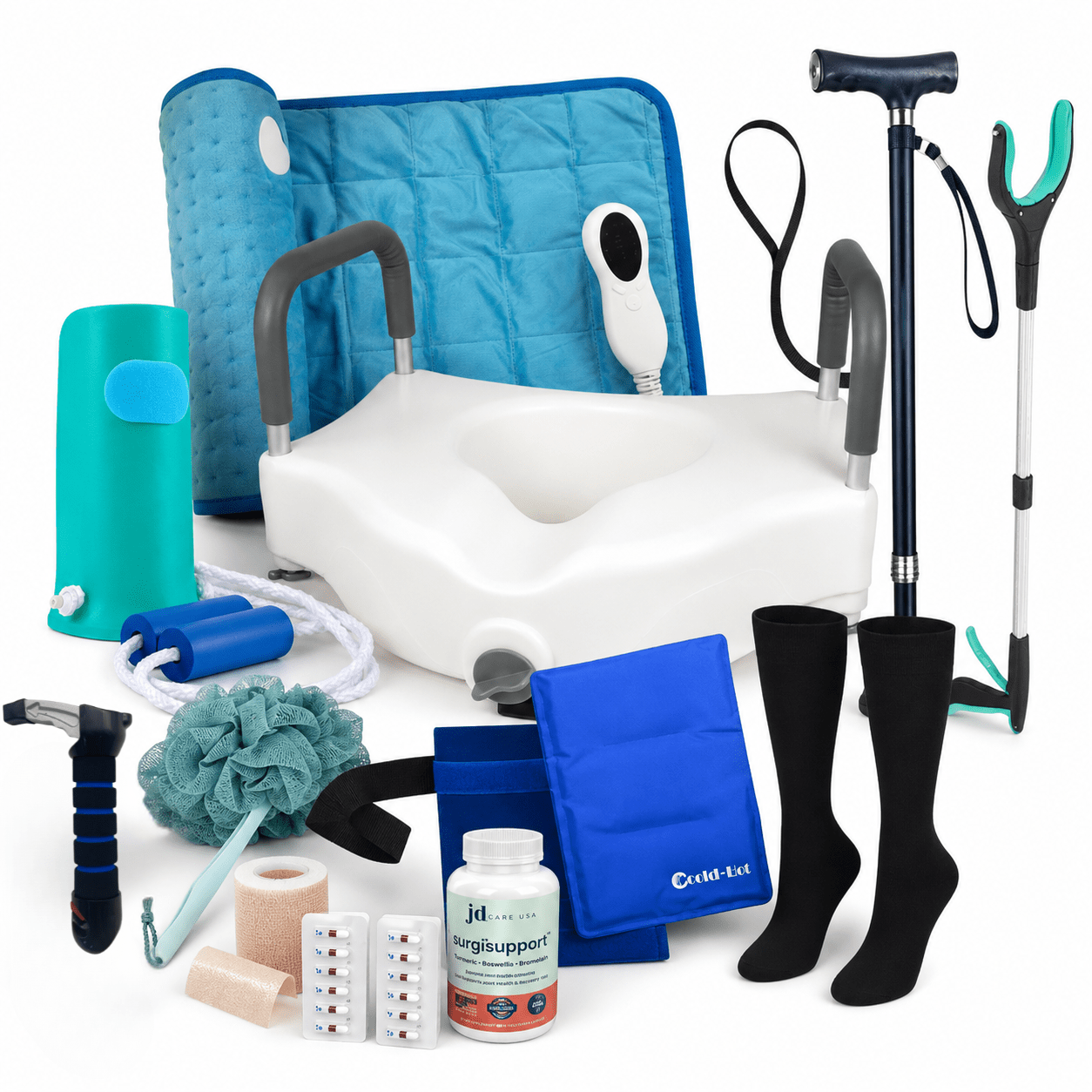
After hip surgery, small daily tasks like getting dressed, reaching items, using the bathroom, applying cold therapy, and keeping medications organized can feel harder than expected. The Hip Surgery Kit with SurgiSupport (17 pc) is designed to bring many of those recovery essentials into one ready-to-use kit.
The kit is built around comfort, mobility, bathroom safety, and daily independence. It includes practical recovery items such as a raised toilet seat with handles, weighted heating pad, ice pack with straps, foldable cane, reacher grabber, sock aid, dressing hook/shoe horn, leg lifter, long handle loofah, compression socks, silicone scar tape, medication tracker labels, door assist handle, and SurgiSupport supplement.7
- Helps reduce bending, reaching, and unnecessary strain during recovery.
- Supports safer movement around the home with daily living and mobility tools.
- Makes a thoughtful care package for someone preparing for hip surgery.
Recovery Timeline From Weeks 1 To 12
Driving may be possible for some patients once they're off sedating medication and can react safely. AAHKS notes that many surgeons allow driving around four to six weeks after surgery, but patients should not drive while taking narcotic pain medicine and should discuss timing with their surgeon.6
By 12 weeks, many patients are doing substantially better, though full recovery can take several months. Some stiffness, weakness, or swelling after activity may linger. That doesn't mean something is wrong: it usually means healing is still in progress. NHS guidance states that hip replacement recovery can take several months and varies depending on age and general health.3
Warning Signs And When To Call Your Surgeon
Some symptoms are inconvenient but normal. Others need prompt attention. Call your surgeon if you develop a fever, worsening redness around the incision, pus-like drainage, opening of the wound, or pain that suddenly gets worse instead of gradually improving.
You should also report calf pain, major swelling in one leg, chest pain, or shortness of breath right away, because those can signal a blood clot or pulmonary embolism. AAOS lists warning signs of a blood clot as calf or leg pain unrelated to the incision, tenderness or redness above or below the knee, and severe swelling that does not improve with elevation. It also lists shortness of breath and sudden chest pain as warning signs that a clot may have traveled to the lungs.4 In an emergency, call 911. Don't wait to see if it passes.
A hip that suddenly becomes hard to move, looks deformed, or feels like it shifted out of place also needs urgent evaluation. So does new numbness, loss of function, or repeated vomiting that keeps you from taking medicines or fluids.
Trust the pattern more than any one moment. A rough afternoon after therapy is one thing. A downward trend over a day or two is another. When in doubt, call.
Conclusion
Hip surgery recovery is rarely effortless, but it is usually manageable when you respect the timeline, protect the incision, move consistently, and speak up early about warning signs. The goal isn't to rush through healing. It's to recover well enough that your new hip, or repaired one, supports your life for years, not just the next few weeks.
Hip Surgery Recovery FAQs
What can I expect during the first 72 hours after hip surgery?
The first 72 hours focus on pain control, safe movement, swelling, and preventing complications like blood clots. You’ll likely feel soreness, fatigue, and need assistance moving. Early walking with a walker and support is common to promote healing and reduce risks.
How soon can I start walking after hip surgery?
Many surgeons encourage standing and walking the same day or the day after surgery, usually with a walker and physical therapist assistance. Early movement helps lower complication risks and aids confidence, though walking distances start short and increase gradually.1
What are the typical stages of hip surgery recovery from weeks 1 to 12?
Weeks 1-2 focus on safe daily movement and managing pain and fatigue. Weeks 3-6 usually bring noticeable improvement, less reliance on pain meds, and possibly switching from walker to cane. Weeks 6-12 emphasize strength, balance, and functional activities, though full healing may take longer.
How should I manage pain and swelling at home after hip surgery?
Take pain medications as prescribed to avoid spikes, use ice packs and elevation for swelling, and keep the incision clean and dry. Avoid soaking the wound and watch for signs like spreading redness or bad odor. Hydration and fiber help prevent common constipation side effects.2
When should I contact my surgeon during hip surgery recovery?
Contact your surgeon if you experience fever, worsening redness or drainage at the incision, sudden increased pain, calf swelling or pain, chest pain, shortness of breath, or if the hip feels dislocated or numbness occurs. Prompt response helps prevent serious complications.4
Why is early physical therapy important after hip surgery?
Physical therapy starts early to improve circulation, rebuild muscle strength, and retrain walking patterns safely. It involves gentle exercises and helps prevent complications while encouraging proper healing and functional recovery without overexertion.3
Sources
- American Association of Hip and Knee Surgeons: Total Hip Replacement
- American Academy of Orthopaedic Surgeons: Activities After Total Hip Replacement
- NHS: Recovering From a Hip Replacement
- American Academy of Orthopaedic Surgeons: Total Hip Replacement
- Mayo Clinic: Hip Replacement
- American Association of Hip and Knee Surgeons: Recovery, Walking, Driving, and Incision Guidance
- JDCare USA: Hip Surgery Kit with SurgiSupport (17 pc)


