
Eyelid Surgery Recovery
Sort by
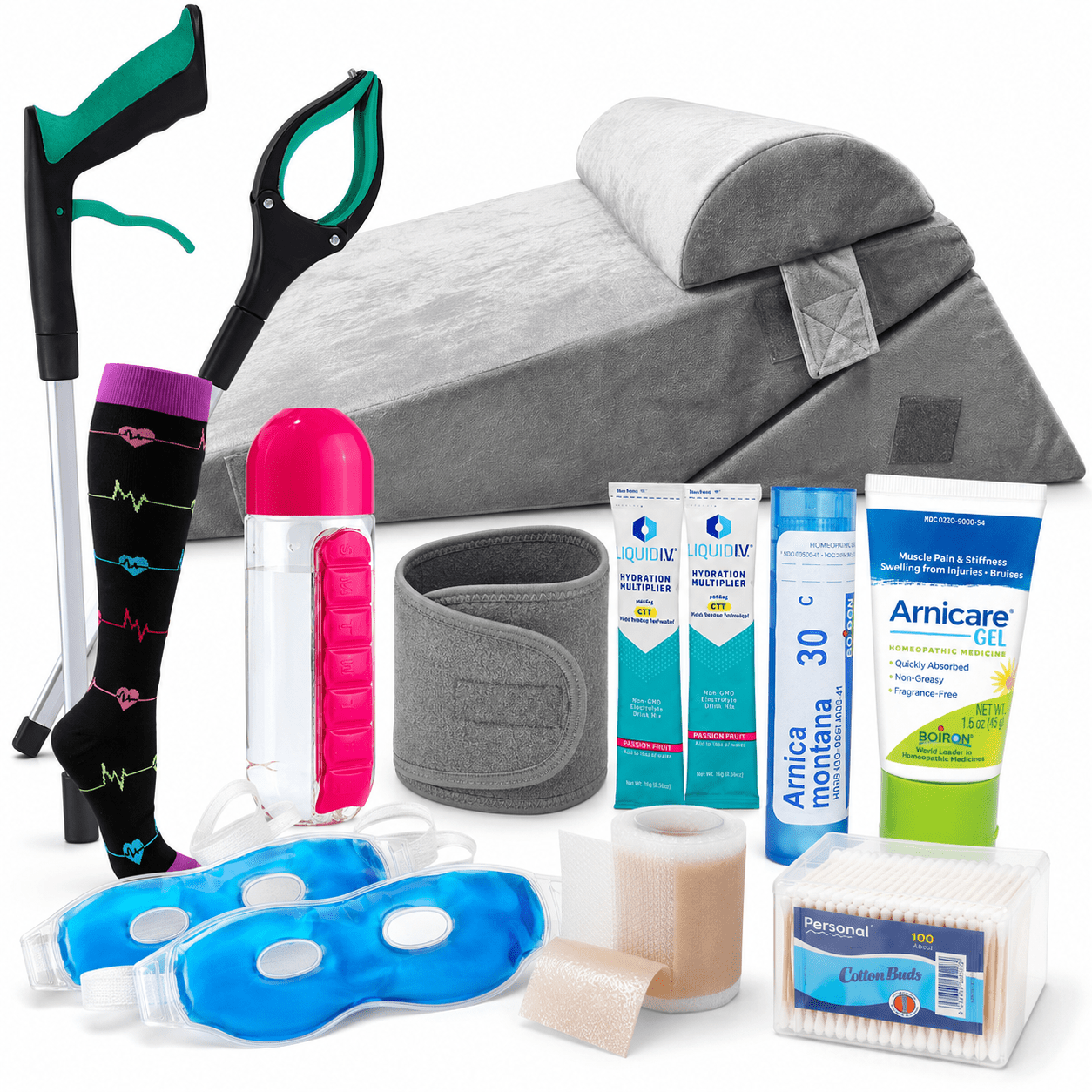
Eyelid Surgery Recovery
Eyelid surgery recovery doesn't have to be mysterious. When we understand the timeline, what's normal, and how to care for our eyes, we tend to heal more comfortably, and get better results. Below, we map out a realistic recovery from blepharoplasty, step by step, with practical tips for swelling, sleep, activity, scar care, and the red flags that mean it's time to call the surgeon. As always, our own surgeon's instructions come first: consider this a clear, confidence-building guide to support them.
What To Expect: A Realistic Recovery Timeline
First 24–48 Hours: Swelling, Bruising, And Rest
The first two days set the tone. We can expect puffy lids, tightness, and mild to moderate bruising. Cool compresses and head elevation are our best friends here. Vision may feel slightly blurry from ointments or tearing, and light sensitivity is common. Plan for couch time, short walks to keep blood moving, and zero heavy lifting. It's normal to feel eye dryness or a gritty sensation, lubricating drops help.
Days 3–7: Stitches, Dryness, And Gradual Improvement
Bruising often peaks around days 2–3 and then begins to fade. Swelling starts to settle, though mornings can look worse thanks to fluid shifting overnight. If non-dissolving sutures were placed, they're typically removed around days 5–7, which usually brings a quick boost in comfort. Some tightness when blinking, mild itching, and dry eyes are still within the normal zone. Most of us can do light desk work by the end of this window if our surgeon agrees.
Weeks 2–4: Back To Routine With Precautions
By week 2, we usually look more like ourselves, still a bit puffy, but socially presentable with or without concealer depending on bruising. Exercise can often resume gradually after clearance, starting with low-impact cardio before higher-intensity workouts. Contact lens wear, makeup, and more normal skincare may return during this period per our surgeon's guidance. Incision lines can appear pink or slightly bumpy: that's part of early healing.
One To Three Months: Final Refinements And Scar Maturation
Most swelling resolves by 6–8 weeks, but subtle refinements continue for up to 3 months (and scars keep maturing beyond that). The lids feel more natural, and our blink mechanics settle. Any lingering tightness typically eases. At this stage, tiny asymmetries often balance out as swelling completes its slow retreat.
How To Care For Your Eyes And Incisions
Cold Compresses And Head Elevation
For the first 48–72 hours, apply cool (not ice-cold) compresses for 10–15 minutes at a time, several times a day, unless told otherwise. Keep the head elevated, even when napping, to limit swelling. Two pillows or a wedge pillow works well.
Cleaning, Ointments, And Eye Drops
We gently clean along the incision line as instructed, usually with sterile saline or a diluted cleanser recommended by our surgeon. A thin ribbon of antibiotic or lubricating ointment often goes on the incisions for the first few days: preservative-free artificial tears can calm dryness. More isn't better: heavy smearing can blur vision and cause goopiness.
Showering, Skincare, And Sunscreen
Most of us can shower within 24–48 hours, letting clean water run over (not blast) the area. Pat, don't rub, dry. Skip exfoliants, retinoids, and acids until cleared. Sunscreen is essential once incisions are closed enough for topical products: a mineral SPF 30–50 plus a brimmed hat helps prevent pigment changes.
Makeup And Contact Lenses: When It's Safe To Resume
Eye makeup usually waits 1–2 weeks, sometimes longer for lower-lid incisions. We avoid mascara at the base of lashes until the incision is sealed and non-irritated. Contact lenses may be okay after about 1–2 weeks when blinking is comfortable and our surgeon gives the green light. When in doubt, glasses for a bit longer are fine.
Managing Pain, Swelling, And Bruising
Medications And What To Avoid
Most patients describe eyelid surgery recovery pain as mild to moderate, manageable with acetaminophen and, if prescribed, a short course of stronger meds for the first day or two. We typically avoid ibuprofen, naproxen, aspirin, and certain supplements (fish oil, ginkgo, high-dose vitamin E) around surgery because they can increase bleeding, follow the medication plan from our surgeon.
Home Remedies That Help (And Those That Don't)
Helpful: cool compresses in the first 2–3 days, then warm compresses later for stiffness if advised: gentle walking: hydration: low-salt meals. Not helpful: hot packs early on, direct ice on the skin, essential oils near incisions, or topical arnica without clearance. Oral arnica/bromelain are commonly discussed: if we use them, we clear it with our surgeon first.
When Swelling Or Bruising Isn't Normal
Rapid one-sided swelling, bulging pain, vision changes, or worsening bruising after it had been improving aren't typical. If something feels off, especially if pain spikes or vision blurs beyond normal ointment haze, we call our surgeon immediately.
Activity, Sleep, And Daily Life
Sleep Position And Eye Protection
We sleep on our back with our head elevated for at least the first week. A travel pillow can prevent rolling. Some of us like a light eye shield to remind us not to rub in our sleep, ask if shields are recommended.
Screens, Reading, And Eye Strain
Screens, ebooks, and long reading sessions dry eyes fast in the first week. Follow the 20-20-20 rule: every 20 minutes, look 20 feet away for 20 seconds. Use artificial tears as needed and dim harsh screen brightness.
Exercise, Lifting, And Bending
High blood pressure in the face worsens swelling and bruising. We avoid bending below the waist, straining, or lifting heavy items (often >10–15 lb) for about two weeks unless our surgeon says otherwise. When cleared, we ramp up gradually: walking → light cardio → resistance work → higher-intensity. If throbbing or pulsing increases, we scale back.
Driving, Work, And Social Events
We only drive when vision is clear, we're off prescription pain meds, and we can shoulder-check comfortably. Many return to remote or desk work within 5–7 days: public-facing roles may prefer 10–14 days. If we're camera-shy, sunglasses are socially acceptable cover for a while, no need to explain.
Travel And Sun Exposure
Short car rides are fine after a couple of days. For air travel, most surgeons prefer we wait at least a week and confirm first: cabin air is dry, so bring tears. Sun and wind can irritate fresh incisions, use a hat, sunglasses, and SPF religiously for several months to protect healing tissue.
Scar Care And Aesthetic Results
Incision Locations: Upper Vs. Lower Eyelids
Upper-lid incisions typically sit in the natural crease, which conceals them well. Lower-lid incisions may be just under the lashes (subciliary) or inside the lid (transconjunctival, no external scar). Our exact plan determines how we care for those lines.
Scar Maturation Timeline And Expectations
Eyelid skin is thin and usually heals beautifully. Expect a pink line for several weeks that slowly fades over 3–6 months, sometimes up to a year. Small lumps or firmness along the incision early on usually soften with time.
Silicone, Taping, And Gentle Massage
When the incision is fully closed and cleared for topical care, many surgeons recommend silicone gel or sheets for several weeks. Paper taping can support tension if suggested. Gentle fingertip massage, only when approved, can help flatten minor thickening.
Pigment Changes And Redness
Post-op redness and temporary darkening (especially if we bruise) are common. Sun protection reduces lingering discoloration. If redness persists or a scar looks raised or widening, we book a follow-up: early tweaks often work best.
Risks, Red Flags, And When To Call Your Surgeon
Vision Changes, Severe Pain, Or Bleeding
Sudden vision loss, double vision that doesn't resolve after ointment clears, severe pain, or a firm, rapidly expanding swelling can signal an emergency. We contact our surgeon immediately or seek urgent care.
Infection Signs And Worsening Swelling
Increasing redness spreading beyond the incision, warmth, pus-like discharge, fever, or swelling that worsens after it had calmed may indicate infection. Early calls prevent bigger problems.
Asymmetry, Lid Malposition, Or Visible Whites
Some asymmetry is normal early, but if one lid pulls down (ectropion), rolls in (entropion), or shows too much white of the eye (scleral show) as healing progresses, we want a timely evaluation.
Suture Irritation, Allergic Reactions, Or Rash
Spitting sutures, contact dermatitis from ointments, or a new rash around the eyes can happen. We stop the suspected product and check in with our surgeon for substitutions or treatments.
Conclusion
Eyelid surgery recovery is a process, not a mystery. When we plan for swelling, protect our incisions, pace our activity, and watch for red flags, we typically heal smoothly and see steady, confidence-boosting improvements week by week. Keep communication open with the surgical team, protect from the sun, and give the lids time, they're small, but they heal remarkably well.
Eyelid Surgery Recovery: FAQs
What is a realistic eyelid surgery recovery timeline?
Expect puffy lids, tightness, and bruising in the first 24–48 hours, with peak bruising around days 2–3. Stitches often come out days 5–7. By week 2, most people look socially presentable. Most swelling resolves by 6–8 weeks, with refinements up to 3 months and scars maturing beyond that.
How can I reduce swelling and bruising during eyelid surgery recovery?
Use cool (not ice-cold) compresses 10–15 minutes several times daily for 48–72 hours, keep your head elevated (including during sleep), walk gently, hydrate, and choose low-salt meals. Follow your surgeon’s medication plan and typically avoid NSAIDs and blood-thinning supplements unless you’re told otherwise.
When can I wear eye makeup and contact lenses after blepharoplasty?
Eye makeup usually waits 1–2 weeks, sometimes longer for lower-lid incisions. Avoid mascara at the lash base until incisions are sealed and non-irritated. Contact lenses are often okay after about 1–2 weeks when blinking is comfortable and your surgeon approves. Glasses are a safe bridge if in doubt.
What red flags during eyelid surgery recovery mean I should call my surgeon?
Call immediately for sudden or worsening vision changes, severe pain, rapidly expanding firm swelling, or significant one-sided swelling. Also report spreading redness, warmth, pus-like discharge, fever, or bruising/swelling that worsens after improving. New lid malposition (rolling in/out or excess white showing) deserves timely evaluation.
Can I get eyelash extensions or a lash lift after eyelid surgery?
Wait until incisions are fully healed and non-tender—often at least 3–4 weeks for extensions and 6 weeks or more for chemical lash lifts, pending surgeon clearance. Adhesives and lifting solutions can irritate healing tissues, and extension removal/placement adds traction. Start gently and stop if any irritation occurs.
Is it safe to combine blepharoplasty with a brow lift, and how does recovery change?
Combining procedures is common and can be safe when medically appropriate. Expect similar aftercare but more swelling and bruising, especially in the forehead/upper lids. Social downtime often extends to 10–14 days. Keep the head elevated, avoid heavy lifting for about two weeks, and follow the combined post-op plan closely.
References
- American Society of Plastic Surgeons. “Eyelid Surgery Recovery.” 2025.
- American Academy of Ophthalmology. “Upper Eyelid Blepharoplasty.”
- Mayo Clinic. “Blepharoplasty.” 2025.
- Cleveland Clinic. “Blepharoplasty (Eyelid Surgery).”
- American Board of Cosmetic Surgery. “Eyelid Surgery Procedure Guide.”
- MacQuillan A. “Recovery After Blepharoplasty.” 2024.
- Oculofacial Arts & Facial Aesthetic Surgery. “Eyelid Surgery Recovery in San Diego: Healing Timeline for Upper and Lower Blepharoplasty.” 2025.
- Enhance Image Rejuvenation & Plastic Surgery. “Blepharoplasty Recovery Timeline: How Long Does It Take to Heal?” 2025.


